Will crooked-nose surgery make both sides perfectly symmetrical?
Surgery can improve a crooked nasal structure and balance, but cannot guarantee identical sides. Facial asymmetry also matters, so nasal alignment, overall facial balance and breathing should be assessed separately.
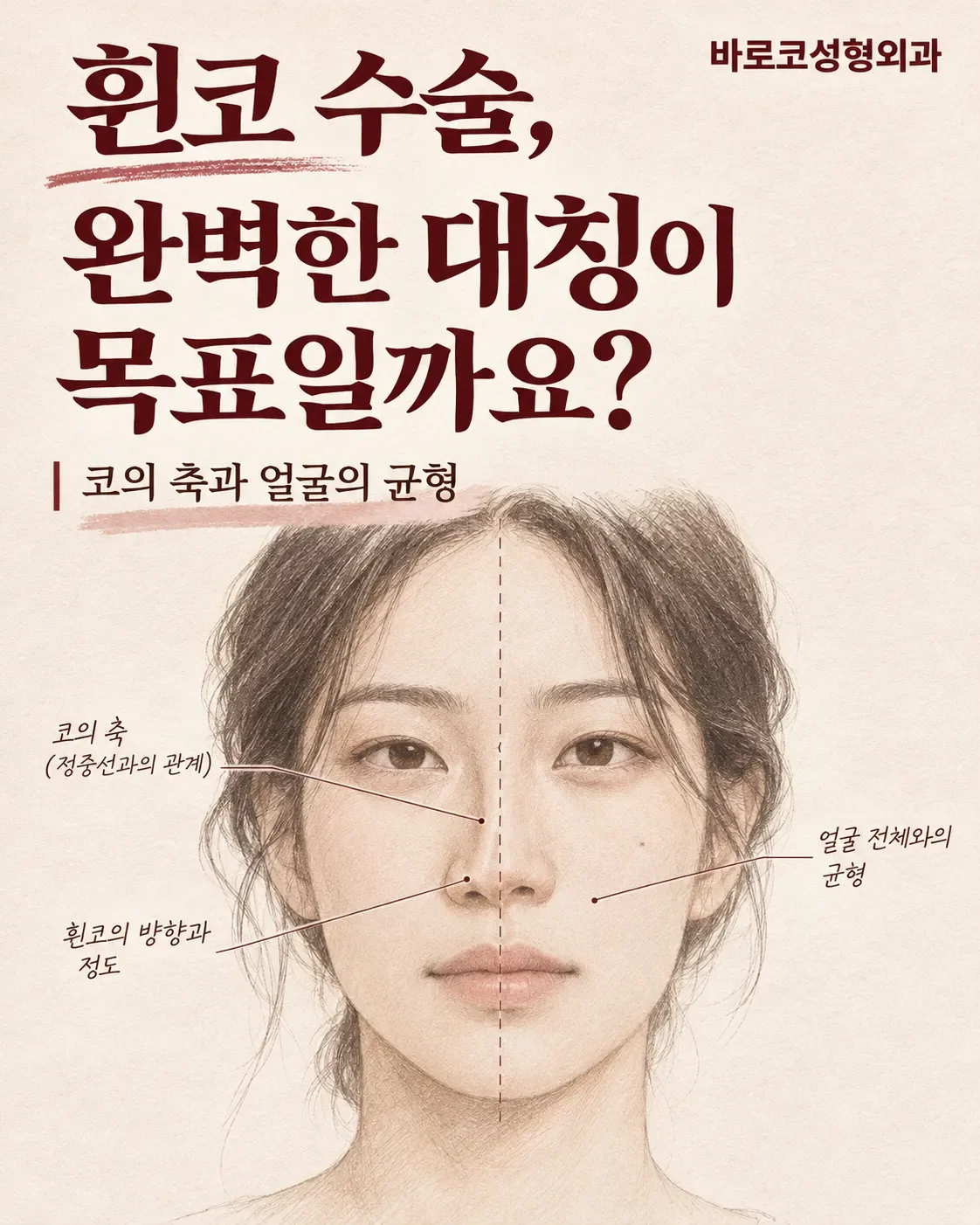
Consider the nose and the whole face
Faces are naturally not perfectly symmetrical. Reducing nasal asymmetry does not make the entire face a mirror image. Balance in surgery is different from matching one flipped photograph to another; specify the difference you hope to improve.[1]
A bridge that appears tilted and nostrils that seem to have different heights are not the same description. Mark the area that bothers you most and note whether the concern is apparent from the front or side.
A photograph cannot identify the whole cause
The upper nose contains bone; the lower part includes cartilage, a firm but flexible tissue. Depending on the plan, surgery may reshape bone or cartilage or add cartilage. One visible line cannot determine which structure needs treatment.[2][3]
The septum is the wall separating the two sides inside the nose. Breathing difficulties need their own assessment. Changing the outside shape does not mean every cause of nasal blockage will be resolved.[1]
Ask what can improve and what may remain
Planning considers your nasal condition, skin and desired changes. Alongside “How much straighter can it become?”, ask “Which differences may remain?” A photograph from a particular angle does not guarantee a result.[2]
If bringing photographs, use front views taken at a similar distance, height and lighting. Rather than measuring differences between a turned-head photo and a front view, use them to explain what usually bothers you.
Separate healing from final assessment
Swelling can persist and shape changes gradually after rhinoplasty. Do not conclude that correction has failed from one photograph immediately after splint removal. Follow-up and final assessment should match the procedure and healing.[2]
Discuss bleeding, infection, breathing difficulties and possible further surgery as well as symmetry. Being able to describe the areas to change, differences that may remain and follow-up timing helps clarify the plan.[2]