A guide to revision rhinoplasty: where should I start?
Start by separating concerns about appearance from breathing difficulties, then organize your previous surgery and the changes you want. Read the information that answers your own question before choosing a date or graft material.
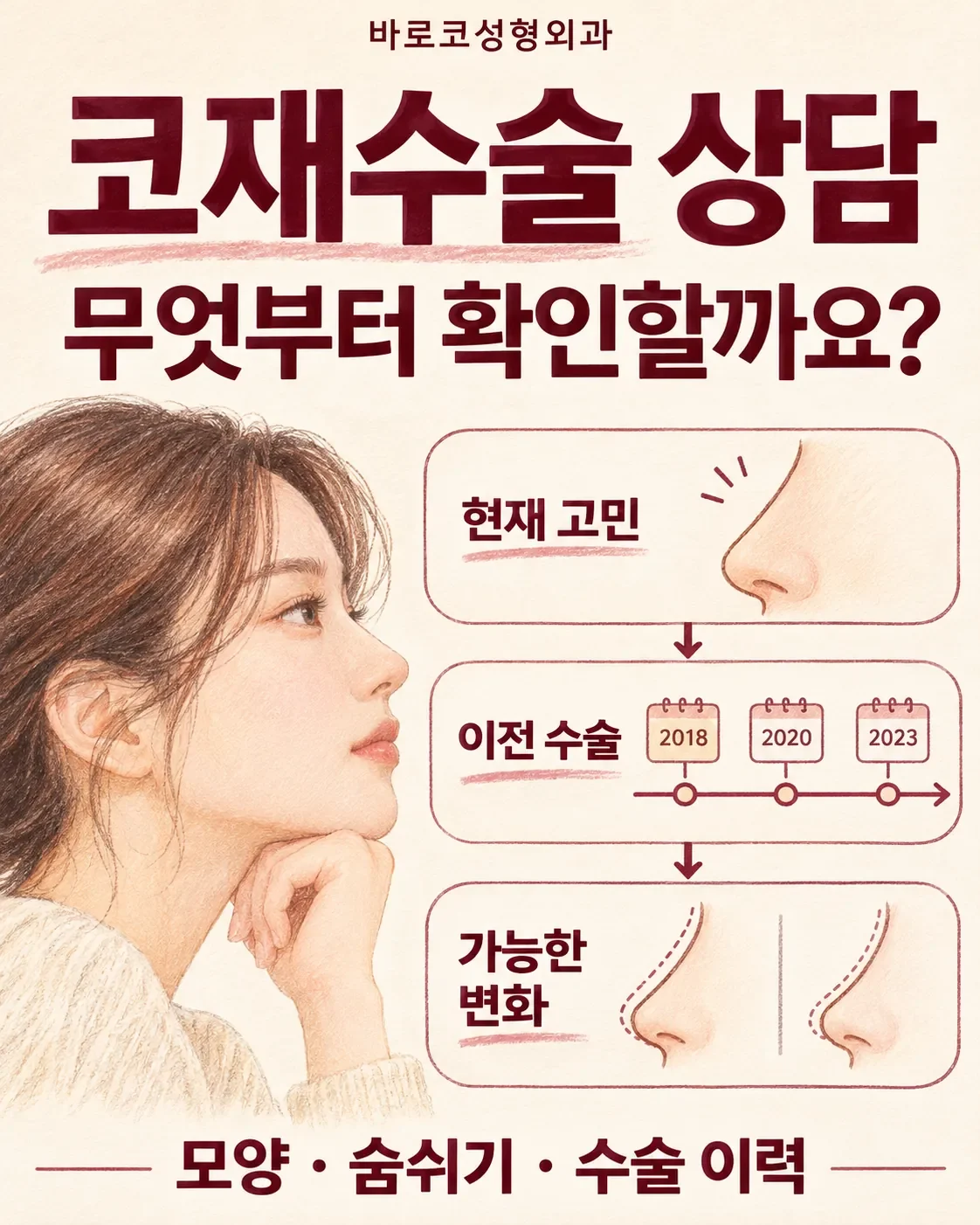
Put your main question into one sentence
Identify the location and situation: does the tip look too high, does the bridge look crooked, or is breathing difficult? Describe both appearance goals and breathing problems without assuming they have the same cause. A consultation considers both goals.[1]
For example, “I want a lower tip in profile but want to keep the width from the front” distinguishes what you want changed from what you want preserved. This is an example of expressing a preference, not a recommendation for a particular operation.
Separate timing from your surgical history
Write down the date, treated areas, materials you know about and any treatment afterward. Separate confirmed information from uncertain memories; do not guess material names. Medicines, allergies and smoking history also matter.[1]
The purpose is to explain your previous surgery, not to decide by yourself whether revision is possible. The links below address two separate questions: timing and what to do when records are unavailable.
A photo and an achievable change are different
Reference photos can help explain which contour or height you like. However, current conditions such as skin thickness and tip-cartilage strength affect the result, so a photo is not a promise that the same shape can be achieved.[2]
Ask both “What can change?” and “What may remain?” Even when you want a small correction, the actual scope may change after examination. Clarify the expected range of change before choosing a technique or material.
Symptoms may need assessment before more reading
If severe pain or unexpected symptoms develop, contact the operating clinic promptly rather than waiting while reading guides. Dissatisfaction with shape and assessment of a postoperative problem are different matters.[3]
Revision does not guarantee a result. Understand bleeding, infection, breathing problems and the possibility of further treatment, and confirm whom to contact and how follow-up will work. These links help organize your next questions; they do not replace an individual diagnosis.[2][3]
Read next
For questions about timing, read how healing and symptoms are considered separately. Korean original — 1
If old records are unavailable, read how to organize what you remember and what can be confirmed. Korean original — 2